There is a lot of confusion surrounding the Chinese CCTV ban India 2026. Many believe that the government has issued a complete ban on all Chinese cctv cameras and that their home security systems will suddenly stop working. That is not entirely accurate.
From April 1, 2026, the Ministry of Electronics and Information Technology (MeitY) has implemented stricter certification requirements. These CCTV cameras India rules are actively blocking the sale of uncertified Chinese surveillance tech, fundamentally reshaping the market.
Let’s break down the facts, the affected brands, and what this means for your home and business security.
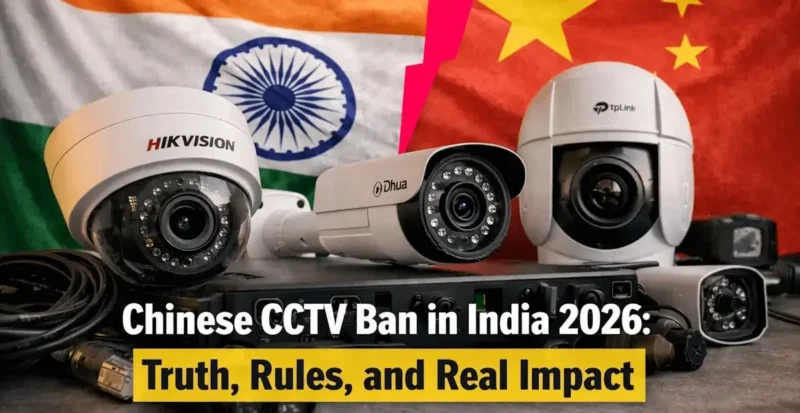
Which CCTV Brands Are Affected by the Chinese CCTV Ban in India (2026)?
The most heavily impacted brands are:
In the past, these companies dominated the Indian market, providing CCTV solutions for homes, retail shops, offices, and even government installations. Today, their uncertified models are legally barred from being sold.
Due to the rapid enforcement of these rules, domestic brands like CP Plus, Qubo, Prama, and Matrix have stepped in, now commanding over 80% of the Indian CCTV market.
Is It a Ban or a Certification Rule?
It is a regulatory block driven by mandatory testing, not a direct name-by-name ban.
As per the latest MeitY CCTV guidelines, every internet-enabled camera must be approved under the STQC (Standardisation Testing and Quality Certification) framework.
This mandatory certification process involves:
- Disclosure of hardware components and the origin of the SoC (System-on-Chip)
- Cybersecurity evaluation and vulnerability testing conducted in authorized Indian laboratories
- Firmware and source code verification * Data privacy and safety audits
The Core Problem:
Many Chinese CCTV Security Products are failing to secure STQC approval. The Indian government is actively refusing to certify products that rely on Chinese-origin chipsets or firmware due to high cybersecurity risks, foreign data routing, and the threat of remote-access backdoors. Without this certification, sellers and distributors cannot legally import or sell these cameras in India.
Why Did India Take This Step?
- National Security Concerns: Internet-connected cameras constantly send and receive data. Authorities raised concerns that devices using foreign firmware could be misused for surveillance or may transfer sensitive footage to servers outside India.
- Cybersecurity Weaknesses: Many low-cost and uncertified cameras come with poor security features, such as weak encryption and fixed default passwords, making them easy targets for hacking.
- Data Privacy Risks: Security testing has found gaps that could allow unauthorized remote access to video feeds from homes, businesses, and public areas.
- Push for “Make in India”: The government is promoting local manufacturing by enforcing transparent supply chains. As a result, many brands are moving to safer chipsets from countries like Taiwan and the United States. However, this shift has increased camera costs by around 15% to 20% due to higher component prices.
What About Existing CCTV Users?
If you currently have a Chinese camera installed, do not panic.
✔️ Your existing CCTV system will keep working without any interruption.
If you are using systems from Hikvision, Dahua Technology, or TP-Link:
- Recording will continue as usual
- Local network live view will remain functional
There is currently no government rule requiring the removal of already installed CCTV cameras in homes or businesses.
Will PC & Mobile Apps and Software Stop Working?
PC software like iVMS-4200, SMARTPSS and Mobile Apps like Hik-Connect, gDMSS, or iDMSS are currently functioning, but the future is uncertain.
The Long-Term Risk:
As these companies reduce their operations in India due to sales restrictions, future support may become limited.
- Software Updates: Security patches and firmware updates are expected to slow down or may eventually stop.
- Cloud Services: Remote viewing platforms could become unstable or face restrictions over time.
- Security Risks: Without regular updates, existing cameras may become more exposed to hacking and other cybersecurity threats.
Can You Buy New Chinese CCTV Cameras Now?
In most cases, no. From April 1, 2026, the sale of CCTV cameras without proper certification is not allowed.. You cannot legally buy uncertified models of a Hikvision ban India scenario product from authorized dealers.
Some specific models from these brands that have switched to non-Chinese chipsets might secure STQC approval eventually, but buyers must verify the STQC stamp before purchasing.
Do Existing Users Need Certification?
No. Certification applies only to manufacturers, importers, and new inventory. If your CCTV cameras are already installed, there is no penalty, and you do not need to get them certified or replace your system.
Rumors vs. Reality
| The Rumor | The Reality |
| All Chinese CCTV brands are permanently banned. | Only non-certified products are blocked. Products that pass STQC testing can still be sold. |
| Existing cameras in my house will shut down. | Existing cameras will continue functioning normally. |
| Mobile apps will immediately stop working. | Apps still work, though future updates and cloud support are highly uncertain. |
| The police will force me to remove my CCTV. | There is no rule requiring the removal of already-installed private cameras. |
Final Takeaway
The so-called Chinese CCTV ban in India (2026) is actually a strict, security-focused quality control policy. Because Chinese brands rely heavily on restricted chipsets and firmware, they are failing to secure the necessary STQC certification CCTV approvals, allowing Indian manufacturers to take over the market.
- Old CCTV systems: Safe to continue using, but stay cautious about future security risks due to limited updates.
- New CCTV systems: Must have STQC certification, and you may see slightly higher prices for approved, secure devices.
Frequently Asked Questions (FAQs)
Is Chinese CCTV completely banned in India in 2026?
No, it is not a complete ban. The government has made STQC certification mandatory, and many Chinese CCTV products are not getting approval, which is why they are effectively restricted from sale.
Will my existing Hikvision or Dahua CCTV stop working?
No. Existing systems from Hikvision or Dahua Technology will continue to work normally without any issue.
Do I need to replace my current CCTV system?
No replacement is required. If your cameras are already installed, there is no rule forcing you to remove or upgrade them.
Can I still use mobile apps for CCTV like Hik-Connect?
Yes, apps are currently working. However, future updates and cloud services may become limited or unreliable.
Why is the government restricting Chinese CCTV brands?
Main reasons include:
1. National security concerns
2. Data privacy risks
3. Cybersecurity vulnerabilities
4. Reducing dependence on foreign surveillance equipment
What is STQC certification in CCTV?
STQC (Standardisation Testing and Quality Certification) is a government approval process that ensures:
1. device security
2. data safety
3. trusted hardware and software
Can I buy Chinese CCTV cameras in India now?
In most cases, no. Cameras without STQC certification cannot be legally sold or imported in India.
Will CCTV prices increase after this rule?
Yes. Prices may increase slightly because brands are shifting to more secure and certified components, which cost more.
Are Indian CCTV brands better now?
Indian and certified brands are becoming more reliable because they follow strict security and compliance standards.
Is there any risk in continuing to use old CCTV cameras?
Yes, in the long term. Without regular updates, older systems may become vulnerable to hacking or software issues.