Closed-circuit television (CCTV) cameras are widely used for surveillance to enhance security at homes, shops, offices, banks, and even public places. One common question people ask is: “Can CCTV cameras see in the dark?”
The answer is Yes, but it depends on the type of camera, its technology, and lighting conditions. In this guide, we will explain how CCTV cameras work at night, what technologies allow them to see in the dark, and what you should know before buying a CCTV camera for low-light use.
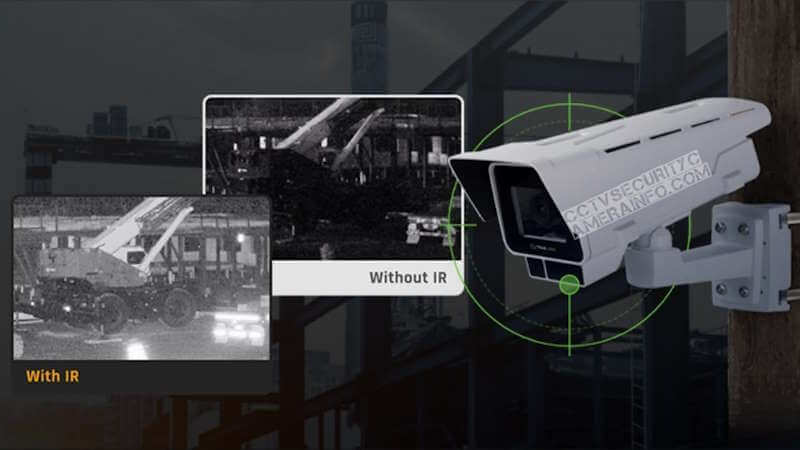
How Do CCTV Cameras Work in the Dark?
CCTV cameras capture light and convert it into an image. In bright conditions, this is easy. But in low-light or total darkness, cameras need special features to still produce clear images.
There are mainly two types of CCTV cameras:
- Traditional Analog Cameras
- Modern Digital IP Cameras
Let’s look at both in detail.
Traditional Analog CCTV Cameras
Analog cameras convert light into electrical signals. They work well during the day or in well-lit areas, but they struggle in darkness.
- They depend on ambient light (street lights, indoor bulbs, etc.).
- As the light decreases, image quality becomes grainy or completely black.
Infrared Support for Analog Cameras
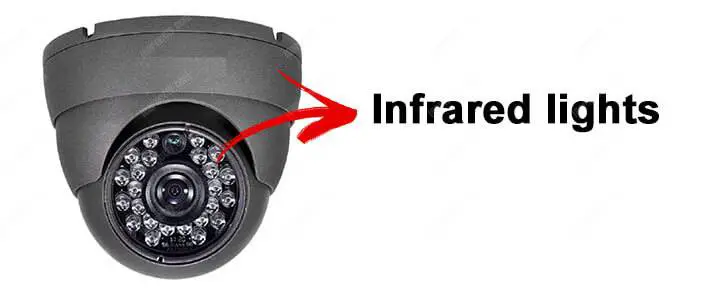
To overcome this limitation, infrared illuminators (IR lights) are often used.
- Infrared light is invisible to the human eye but can be detected by the camera’s sensor.
- IR illuminators emit this light, and the camera translates the reflections into a visible black-and-white image.
This allows analog CCTV cameras to see in total darkness, but usually only in black and white, not in color.
Modern Digital CCTV Cameras (IP Cameras)
Digital/IP cameras use advanced image sensors like CCD (Charge-Coupled Device) or CMOS (Complementary Metal-Oxide Semiconductor). These cameras are much better at handling low-light environments.
They come with advanced features such as:
1. Infrared (IR) Illumination
- Many IP cameras have built-in infrared LEDs.
- These LEDs light up the area with invisible IR light.
- The camera sensor detects this light and produces a clear image, even in complete darkness.
- The image is usually black and white at night.
Example: Dome and bullet IR cameras used outside houses and shops.
2. Low-Light Image Sensors
Some IP cameras use special low-light sensors with larger pixels, higher sensitivity, and noise reduction.
- They can capture more light even in dim conditions.
- This allows for color night vision in some models.
3. Extra Technologies
- WDR (Wide Dynamic Range): Helps in balancing very bright and very dark areas. Example: a streetlight and a dark corner both visible clearly.
- BSI (Backside Illumination): Enhances light capture for clearer low-light footage.
- 3D Digital Noise Reduction: Reduces grainy or blurry images at night.
Types of Night Vision in CCTV Cameras
When you buy a CCTV camera, you will come across different night vision technologies. Here are the main ones:
🔹 Standard IR Night Vision
- Uses infrared LEDs.
- Shows black-and-white images at night.
- Range: 10m to 50m depending on the camera.
🔹 Color Night Vision (Full-Color CCTV)
- Uses highly sensitive image sensors.
- Can record in color even in very low light.
- Often supported by a small white LED light for clarity.
🔹 Starlight Technology
- Advanced low-light sensors.
- Can produce clearer color images in very dim light (like moonlight or streetlight).
- Often used in high-end IP cameras.
Factors That Affect Low-Light CCTV Performance
Even with advanced technology, performance in the dark depends on many factors:
- Camera Resolution: Higher resolution = better clarity at night.
- Lens Quality: A good wide-aperture lens allows more light to enter.
- IR Range: Cameras with more IR LEDs can see farther in the dark.
- Placement: A badly placed camera (pointing at bright lights) will produce poor results.
- Ambient Light: Even small sources (street lamp, moonlight) help improve image quality.
Benefits of CCTV Cameras That See in the Dark
- 24/7 Security: No blind spots at night.
- Crime Prevention: Criminals are less likely to act when they know cameras can record them clearly, even in darkness.
- Evidence Collection: Important for police or legal investigations.
- Peace of Mind: Owners can monitor the property anytime.
Limitations of Night Vision CCTV Cameras
- Range Limit: Most cameras can see 10–50 meters in the dark, but clarity reduces with distance.
- Black & White Images: Many IR cameras don’t show color at night.
- Cost: Color night vision and starlight cameras are more expensive.
- Weather Effects: Fog, rain, or dust can reduce IR clarity.
FAQs About CCTV in the Dark
Q1. Can all CCTV cameras see in the dark?
No. Only cameras with infrared LEDs, starlight sensors, or low-light technology can capture usable images in total darkness.
Q2. Are night vision CCTV cameras expensive?
Basic IR cameras are affordable. But color night vision and starlight models cost more.
Q3. Do night vision cameras work through glass?
Infrared reflection makes glass difficult for night vision. Place cameras outside for best results.
Q4. Can CCTV record in complete darkness without IR?
No, without IR or some light source, cameras cannot see anything in complete darkness.
Q5. Which is better – IR or color night vision?
IR: Cheaper, reliable, black & white video.
Color night vision: More detail, better evidence, higher cost.
Conclusion
So, can CCTV cameras see in the dark?
Yes, but their effectiveness depends on the type of camera and technology.
- Analog cameras need external IR support.
- Modern digital/IP cameras come with built-in infrared LEDs, starlight sensors, and advanced low-light features.
If you want basic night security, go with standard IR cameras. If you need clear color footage at night, invest in starlight or full-color CCTV cameras.
Choosing the right camera ensures round-the-clock surveillance and peace of mind.